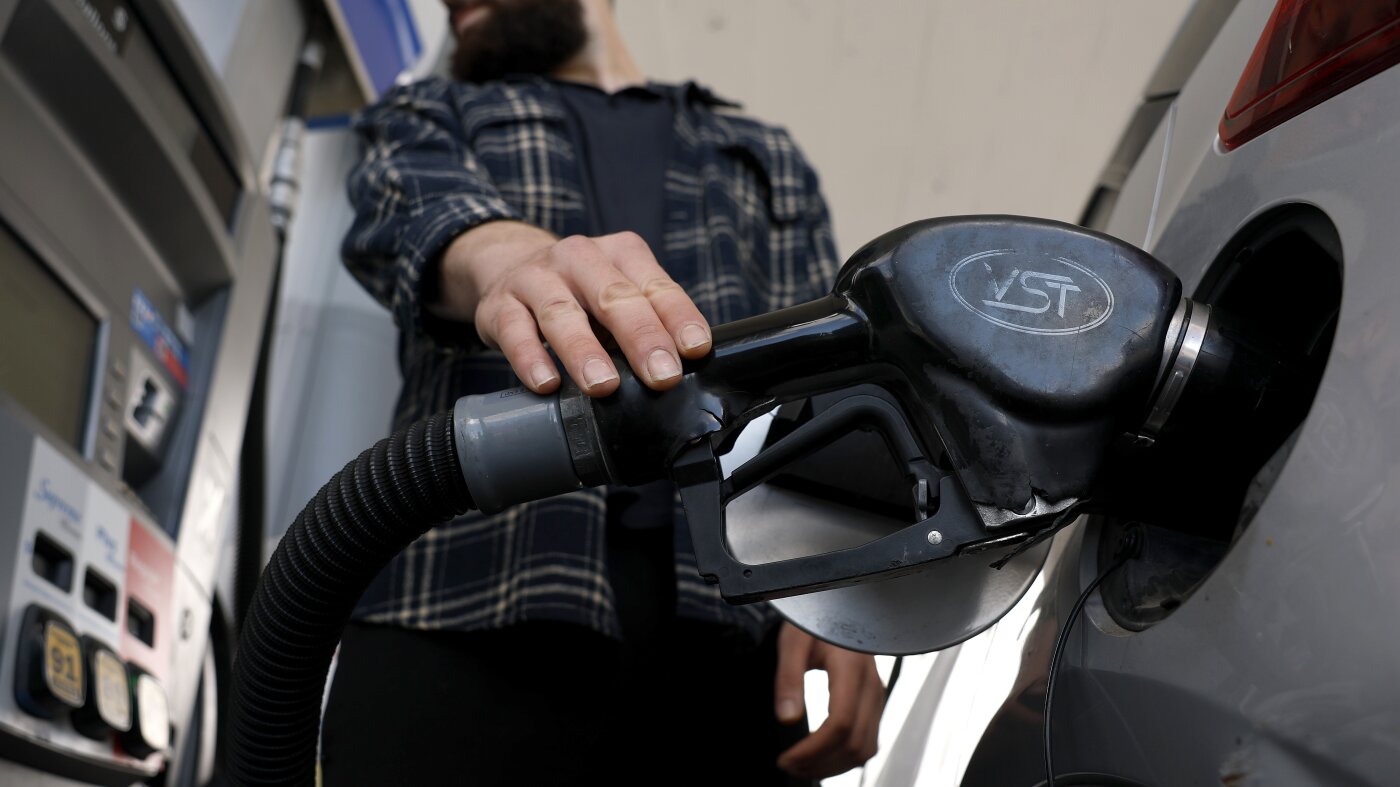
Gas Price Saving Tips - reflects ongoing market developments, investor sentiment, and trading activity across US financial markets. The national average for regular gasoline has reached $4.55 per gallon as the U.S. enters one of its busiest travel weekends of the year. Drivers are weighing options such as reducing speed, switching to electric vehicles, or avoiding driving altogether to cut fuel costs.
Live News
Gas Price Saving Tips - reflects ongoing market developments, investor sentiment, and trading activity across US financial markets. The integration of AI-driven insights has started to complement human decision-making. While automated models can process large volumes of data, traders still rely on judgment to evaluate context and nuance. According to recent data, the national average price for a gallon of gasoline stands at $4.55, a level that comes as millions of Americans prepare for one of the year’s highest-traffic travel weekends. This price point places significant pressure on household budgets, particularly for those planning road trips or holiday visits. The source article discusses several approaches consumers may consider to reduce their fuel expenditure. Among the suggested strategies are driving slower—which typically improves fuel efficiency—and considering the switch to electric vehicles (EVs) as a long-term cost-saving measure. Another option mentioned is reducing or eliminating driving altogether by using alternative transportation or staying home. These recommendations reflect a broader trend of consumers seeking immediate ways to offset rising fuel costs. The reported average of $4.55 per gallon represents a notable increase from prior periods, though specific historical comparisons were not provided in the source. The article does not specify any government policy responses or industry forecasts, instead focusing on individual driver behaviors that could lead to savings.
Soaring Gas Prices at $4.55 Per Gallon: Strategies for Cost Savings Amid Holiday Travel Some investors prioritize simplicity in their tools, focusing only on key indicators. Others prefer detailed metrics to gain a deeper understanding of market dynamics.Integrating quantitative and qualitative inputs yields more robust forecasts. While numerical indicators track measurable trends, understanding policy shifts, regulatory changes, and geopolitical developments allows professionals to contextualize data and anticipate market reactions accurately.Soaring Gas Prices at $4.55 Per Gallon: Strategies for Cost Savings Amid Holiday Travel Some investors prioritize simplicity in their tools, focusing only on key indicators. Others prefer detailed metrics to gain a deeper understanding of market dynamics.Real-time data is especially valuable during periods of heightened volatility. Rapid access to updates enables traders to respond to sudden price movements and avoid being caught off guard. Timely information can make the difference between capturing a profitable opportunity and missing it entirely.
Key Highlights
Gas Price Saving Tips - reflects ongoing market developments, investor sentiment, and trading activity across US financial markets. Scenario planning based on historical trends helps investors anticipate potential outcomes. They can prepare contingency plans for varying market conditions. Key takeaways from this situation include the potential shift in consumer behavior when gasoline prices remain elevated. The $4.55 national average may encourage more drivers to adopt fuel-efficient driving habits, such as maintaining steady speeds and proper tire inflation, or to consider alternative vehicles. The timing of the high prices—coinciding with a peak travel weekend—could amplify the financial strain on households, potentially affecting spending in other areas. The options highlighted—driving slower, going electric, or not driving—represent a spectrum of immediate to longer-term solutions. While driving slower costs nothing and can yield immediate savings at the pump, transitioning to an EV involves a significant upfront investment. The “don’t drive at all” option, while extreme, may be feasible for short trips or for those with access to public transit. These strategies, however, are individual choices and do not address broader market dynamics such as supply constraints or refinery capacity that influence prices.
Soaring Gas Prices at $4.55 Per Gallon: Strategies for Cost Savings Amid Holiday Travel While algorithms and AI tools are increasingly prevalent, human oversight remains essential. Automated models may fail to capture subtle nuances in sentiment, policy shifts, or unexpected events. Integrating data-driven insights with experienced judgment produces more reliable outcomes.Real-time monitoring of multiple asset classes allows for proactive adjustments. Experts track equities, bonds, commodities, and currencies in parallel, ensuring that portfolio exposure aligns with evolving market conditions.Soaring Gas Prices at $4.55 Per Gallon: Strategies for Cost Savings Amid Holiday Travel Experienced traders often develop contingency plans for extreme scenarios. Preparing for sudden market shocks, liquidity crises, or rapid policy changes allows them to respond effectively without making impulsive decisions.Diversification in data sources is as important as diversification in portfolios. Relying on a single metric or platform may increase the risk of missing critical signals.
Expert Insights
Gas Price Saving Tips - reflects ongoing market developments, investor sentiment, and trading activity across US financial markets. Investors often test different approaches before settling on a strategy. Continuous learning is part of the process. From an investment perspective, the current high gasoline prices could have implications for energy-related sectors and consumer discretionary spending. Sustained prices around $4.55 per gallon might lead to reduced demand for gasoline in the short term, potentially influencing crude oil futures and refining margins. However, the extent of any such impact would depend on how long prices remain at elevated levels and whether they prompt structural changes in consumer behavior, such as faster adoption of electric vehicles. The strategies discussed—driving slower, going electric, not driving—are practical responses for individuals, but they also illustrate the trade-offs consumers face. Policymakers and industry participants may watch these trends to gauge whether the current price level is temporary or part of a longer-term shift in energy costs. It remains uncertain whether the $4.55 average will persist or ease after the holiday weekend. Broader market conditions, including global oil supply and geopolitical factors, would likely continue to influence future price movements. Disclaimer: This analysis is for informational purposes only and does not constitute investment advice.
Soaring Gas Prices at $4.55 Per Gallon: Strategies for Cost Savings Amid Holiday Travel Investor psychology plays a pivotal role in market outcomes. Herd behavior, overconfidence, and loss aversion often drive price swings that deviate from fundamental values. Recognizing these behavioral patterns allows experienced traders to capitalize on mispricings while maintaining a disciplined approach.Diversifying information sources enhances decision-making accuracy. Professional investors integrate quantitative metrics, macroeconomic reports, sector analyses, and sentiment indicators to develop a comprehensive understanding of market conditions. This multi-source approach reduces reliance on a single perspective.Soaring Gas Prices at $4.55 Per Gallon: Strategies for Cost Savings Amid Holiday Travel Maintaining detailed trade records is a hallmark of disciplined investing. Reviewing historical performance enables professionals to identify successful strategies, understand market responses, and refine models for future trades. Continuous learning ensures adaptive and informed decision-making.Some investors track short-term indicators to complement long-term strategies. The combination offers insights into immediate market shifts and overarching trends.